Step 1
Machine-Ready Briefs
AI translates unstructured needs into a technical, machine-ready project request.
We use cookies to improve your experience and analyze site traffic. You can accept all cookies or only essential ones.
 Bilarna
Stop browsing static lists. Tell Bilarna your specific needs. Our AI translates your words into a structured, machine-ready request and instantly routes it to verified AI-Powered Email Management experts for accurate quotes.
AI translates unstructured needs into a technical, machine-ready project request.
Compare providers using verified AI Trust Scores & structured capability data.
Skip the cold outreach. Request quotes, book demos, and negotiate directly in chat.
Filter results by specific constraints, budget limits, and integration requirements.
Eliminate risk with our 57-point AI safety check on every provider.
Verified companies you can talk to directly
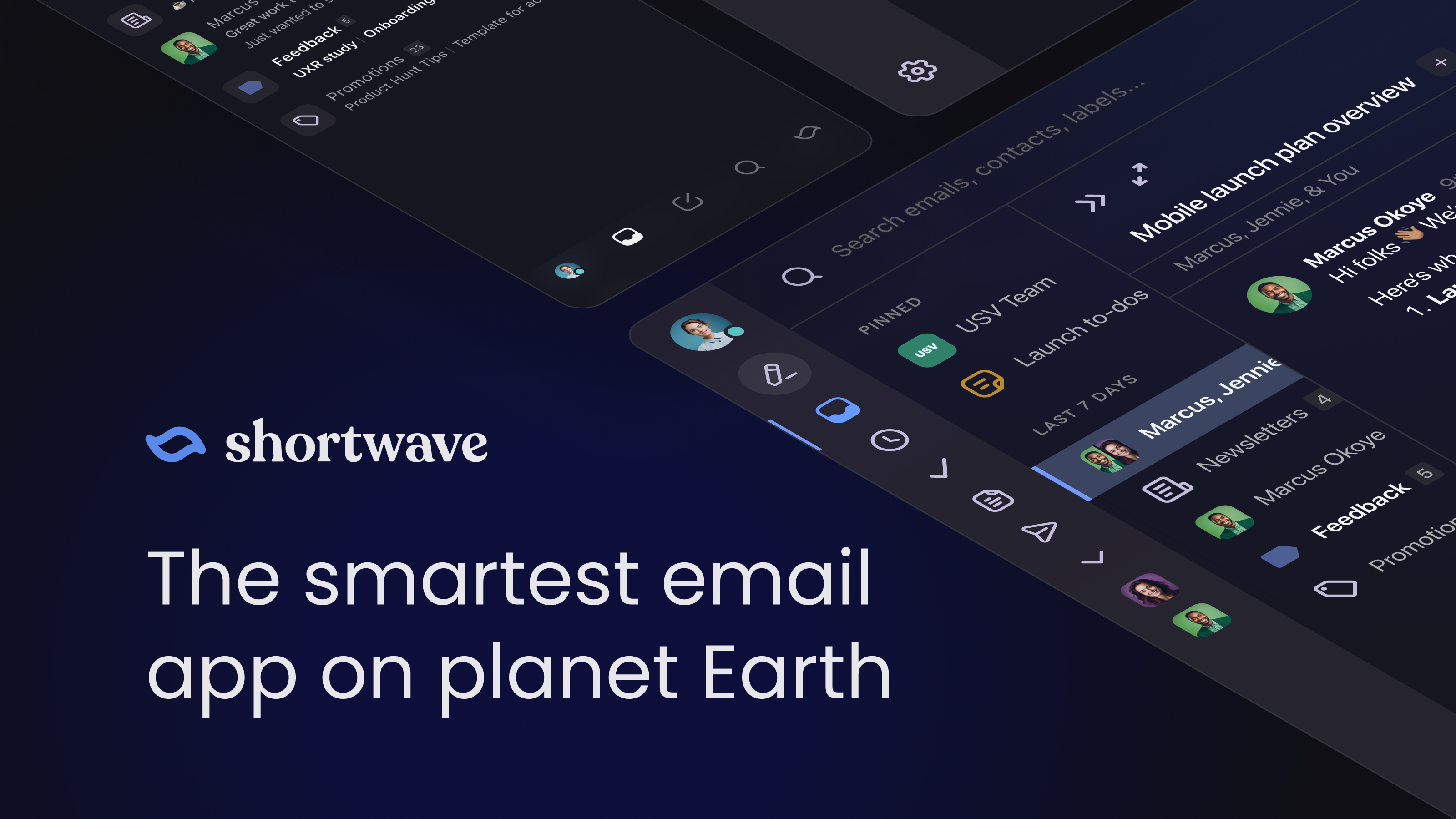
Agentic AI that helps you organize, write, search, schedule, and more with just a prompt
AI email management co-pilot that drafts replies, triages clutter, and captures meeting notes - while you stay in control.
AI-powered inbox revolution. No spam, no lost tasks, simplified search. Organize your mailbox with AI in just few clicks. Start your free trial today!

Proxis (YC S24) puts your enterprise email on autopilot.
Email inbox API for AI agents
Run a free AEO + signal audit for your domain.
AI Answer Engine Optimization (AEO)
List once. Convert intent from live AI conversations without heavy integration.
AI-Powered Email Management is the application of artificial intelligence to automate and enhance business email workflows. It utilizes machine learning and natural language processing to intelligently triage, categorize, prioritize, and draft responses to inbound messages. This technology significantly reduces manual email handling time, improves response accuracy, and ensures critical communications are never missed.
AI algorithms scan and parse all incoming emails to understand sender intent, urgency, and topic using contextual analysis.
The system automatically categorizes, prioritizes, and routes emails to appropriate teams or individuals based on predefined rules and learned patterns.
Using NLP, the platform drafts context-aware email replies, suggests next actions, or triggers automated workflows to resolve common inquiries.
Automates the triage of high-volume support tickets arriving via email, ensuring urgent issues are escalated instantly to reduce resolution time.
Prioritizes inbound sales inquiries and uses AI to score leads based on email content, accelerating the sales pipeline for B2B teams.
Filters and flags sensitive communications requiring legal review, ensuring compliance with data governance and regulatory retention policies.
Manages client onboarding, account queries, and transaction confirmations at scale while maintaining strict audit trails and security protocols.
Routes internal service desk requests and system alerts to the correct personnel, minimizing downtime and improving internal workflow efficiency.
Bilarna evaluates all AI-Powered Email Management providers through a proprietary 57-point AI Trust Score. This score rigorously assesses technical capabilities, data security certifications, proven client implementation track records, and compliance with regional data privacy laws. Bilarna continuously monitors provider performance and client feedback to ensure listed partners maintain the highest standards of reliability and expertise.
Costs vary significantly based on deployment scale, required integrations, and feature complexity, typically following a per-user or per-mailbox subscription model. Enterprise implementations often involve an initial setup fee plus ongoing licensing, with total cost influenced by email volume and desired automation depth.
Reputable providers implement enterprise-grade encryption for data in transit and at rest, alongside strict access controls and compliance with frameworks like GDPR or SOC 2. The AI models are typically trained on anonymized metadata, not sensitive email content, to maintain confidentiality and adhere to information security best practices.
A standard cloud-based deployment for a mid-sized team can be operational within 2 to 6 weeks, depending on existing infrastructure and integration requirements. The timeline includes configuration, rule definition, integration with existing CRMs or ticketing systems, and a supervised learning period for the AI to optimize its accuracy.
Essential features include intelligent categorization, sentiment analysis, automated response drafting, seamless integration with major productivity suites (like Microsoft 365 or Google Workspace), and detailed analytics dashboards. For regulated industries, features like compliance archiving and e-discovery support are critical differentiators.
Modern systems achieve high accuracy (often over 90%) for common business scenarios through continuous learning from user corrections. For nuanced or highly specialized communication, the AI typically suggests actions or drafts for human review, creating a collaborative and increasingly efficient workflow over time.
Yes, the AI-powered teacher tools are free and include the following features: 1. Worksheet Generator to create custom worksheets quickly. 2. Lesson Plan Generator for comprehensive, standards-aligned lesson plans. 3. Report Card Comments generator for professional, personalized feedback. 4. Coloring Page Generator to turn ideas into printable coloring pages. 5. All tools save your work automatically to a cloud library accessible from any device. 6. Tools are private, secure, and supported with fast in-app chat assistance.
Typically, after an initial trial period—often around seven days—business management software platforms do not charge monthly fees or enforce minimum usage requirements. Instead, continued use is contingent upon subscribing to a paid plan. This approach allows users to evaluate the software's features risk-free before committing financially. It is advisable to review the specific pricing details and terms on the provider's official website to understand any conditions related to payment plans, as these can vary between services.
Yes, a Laboratory Information Management System is designed to integrate seamlessly with various software systems and devices. This integration capability allows automatic transfer of test results and other data between the LIMS and external applications, reducing manual data entry and minimizing errors. It supports connectivity with laboratory instruments, billing systems, and other business software, enabling a unified workflow. Users can access test results and invoices from any device, ensuring flexibility and convenience. Such integrations enhance data accuracy, improve operational efficiency, and facilitate better communication across different platforms used within the laboratory environment.
Yes, AI dental receptionists can integrate seamlessly with most major practice management systems (PMS) that offer online appointment pages or APIs. This integration allows the AI to book appointments directly into your existing system, pull customer form responses from your CRM, and route calls to the correct clinic and calendar. Such integration ensures that all patient interactions are synchronized with your practice’s workflow, improving efficiency and reducing manual data entry errors.
Yes, AI design engineering tools are designed for seamless integration with existing CAD, BIM, and project management software. This compatibility ensures that engineers can continue using their preferred tools without disrupting established workflows. The integration facilitates data exchange and collaboration, enhancing efficiency and enabling teams to leverage AI capabilities alongside their current systems.
Yes, AI email tools can be trained with your own documents or website content. 1. Access the AI tool's dashboard or training section. 2. Upload your documents, FAQs, or provide your website URL. 3. The AI will analyze the content to learn your specific information. 4. Use the trained AI to generate personalized and contextually relevant email replies. 5. Monitor character counts to stay within your plan's limits.
Yes, AI planning platforms are designed to integrate seamlessly with existing trucking management tools and portals. This means there is no need to replace current systems, allowing fleets to enhance their operations without disrupting established workflows. Integration is typically facilitated through pre-built connectors that link the AI platform with the fleet's existing data sources and software. This approach enables a fast start and real impact, as fleets can deploy AI-driven planning solutions risk-free and begin seeing results within a short timeframe, often within a month. Continuous support is also provided to ensure smooth integration and ongoing optimization.
Yes, AI timekeeping software is designed to integrate seamlessly with existing legal practice management tools. This integration allows the software to draft and release time entries directly into platforms commonly used by law firms, such as Clio, MyCase, and Filevine. By working within the tools lawyers already use, the software eliminates the need for workflow changes, making adoption easier and more efficient. This connectivity ensures that time tracking and billing processes are streamlined, enabling law firms to increase billable hours and improve overall productivity without disrupting their current systems.
Yes, many AI-powered browsers built on Chromium technology are compatible with Chrome extensions, allowing users to continue using their favorite add-ons without interruption. These browsers often support seamless import of existing browser data such as bookmarks, passwords, and extensions from Chrome, making the transition smooth and convenient. This compatibility ensures that users do not lose their personalized settings or tools when switching to an AI-enabled browser. By combining AI capabilities with familiar browser features, users can enhance productivity while maintaining their preferred browsing environment.
Yes, an AI agent can be configured to perform automated actions or remediations during incident management. These actions are governed by strict permissions and guardrails to ensure security and prevent unauthorized changes. Teams can define scopes, controls, and approval workflows to safeguard critical operations. This capability allows the AI agent not only to identify issues but also to initiate fixes, such as creating pull requests for code exceptions, thereby accelerating incident resolution while maintaining operational safety.