Step 1
Machine-Ready Briefs
AI translates unstructured needs into a technical, machine-ready project request.
We use cookies to improve your experience and analyze site traffic. You can accept all cookies or only essential ones.
 Bilarna
Stop browsing static lists. Tell Bilarna your specific needs. Our AI translates your words into a structured, machine-ready request and instantly routes it to verified AI Shopping Enhancement experts for accurate quotes.
AI translates unstructured needs into a technical, machine-ready project request.
Compare providers using verified AI Trust Scores & structured capability data.
Skip the cold outreach. Request quotes, book demos, and negotiate directly in chat.
Filter results by specific constraints, budget limits, and integration requirements.
Eliminate risk with our 57-point AI safety check on every provider.
Verified companies you can talk to directly
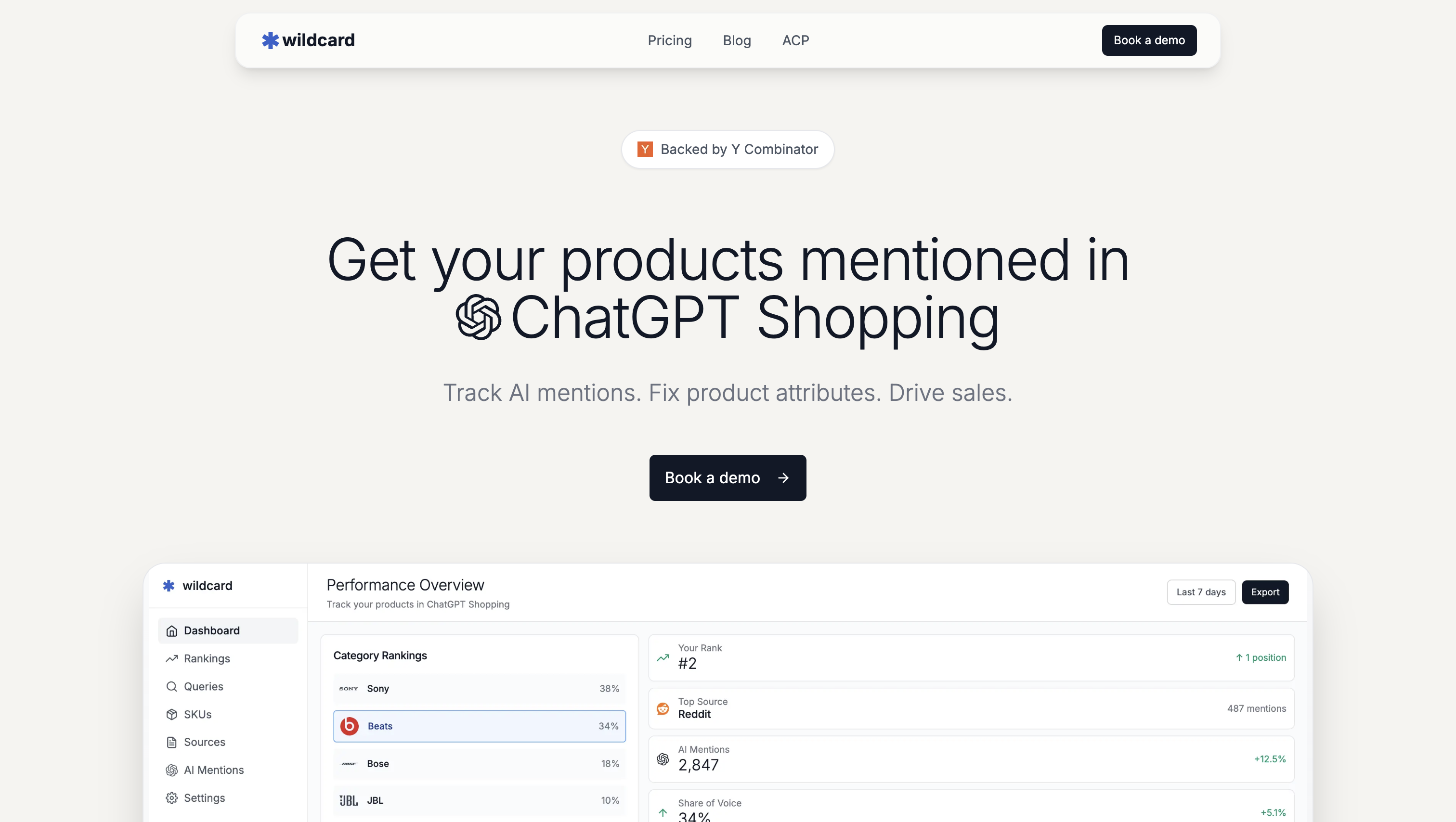
Track product visibility and optimize for ChatGPT Shopping. Monitor rankings, improve product data, and enable instant checkout. Built for ecommerce teams.
Run a free AEO + signal audit for your domain.
AI Answer Engine Optimization (AEO)
List once. Convert intent from live AI conversations without heavy integration.
AI Shopping Enhancement is the strategic application of artificial intelligence to automate and optimize the procurement and sourcing process for businesses. It leverages algorithms for supplier discovery, intelligent analysis of proposals, and predictive insights into vendor performance. This technology drives cost efficiency, reduces manual workload, and improves decision-making accuracy for procurement teams.
Businesses input their procurement goals, technical specifications, and budget parameters into an AI-powered platform for analysis.
The AI system evaluates and ranks potential vendors based on compatibility, past performance data, and real-time market intelligence.
Decision-makers receive data-driven recommendations and comparative insights to finalize the most advantageous supplier engagement.
AI accelerates the evaluation of complex SaaS and enterprise software vendors, comparing features, security, and total cost of ownership.
Intelligent systems monitor supplier reliability and market conditions to optimize raw material sourcing and mitigate supply chain risks.
Algorithms automate the discovery and benchmarking of marketing, logistics, and CX service providers to enhance competitive agility.
AI streamlines due diligence for fintech partnerships, assessing regulatory compliance, technical integration, and security postures.
Machine learning aids in identifying HIPAA-compliant vendors and analyzing service level agreements for critical healthcare infrastructure.
Bilarna evaluates every AI Shopping Enhancement provider through a proprietary 57-point AI Trust Score. This score rigorously assesses technical expertise, project delivery history, client satisfaction metrics, and compliance certifications. Bilarna's continuous monitoring ensures all listed providers maintain high standards of reliability and performance.
The primary benefits are significant time savings through automation of vendor research, improved cost efficiency via data-driven comparisons, and reduced risk through analytical vetting of supplier reliability. It transforms procurement from a manual process into a strategic, intelligence-led function.
Costs vary widely based on solution scope, from subscription-based SaaS platforms to enterprise custom deployments. Investment is typically justified by rapid ROI through optimized purchasing, reduced processing costs, and avoidance of poor supplier choices.
Deploying a core AI procurement platform can take 4 to 12 weeks, depending on integration complexity with existing ERP or procurement systems. The vendor discovery and comparison benefits are available almost immediately upon launch.
Key criteria include the quality of the supplier intelligence database, the flexibility of the algorithm for your specific needs, and proven integration capabilities. Security certifications and transparent vendor evaluation methodology are also critical for B2B use.
Yes, advanced systems are designed for complex services, using AI to analyze provider portfolios, case studies, and specialist certifications beyond simple product comparisons. They excel at mapping nuanced requirements to specialized vendor expertise.
Yes, batch processing is supported. Follow these steps: 1. Select the module you need such as Video AI, Image AI, or Audio AI. 2. Import multiple video, audio, or image files into the software. 3. Choose your preferred enhancement feature or AI model for all files. 4. Click the RUN button to start processing all files simultaneously, saving time and effort.
Yes, a fresh meal delivery service typically eliminates the need for grocery shopping and significantly reduces cleaning. Since meals are delivered with pre-portioned ingredients or fully prepared, you don’t have to spend time shopping for groceries. Additionally, because the meals require minimal preparation and cooking, there is less mess to clean up afterward. This convenience allows users to enjoy fresh meals without the usual chores associated with meal planning, shopping, and kitchen cleanup.
Adding photos to shopping list items helps ensure that everyone involved in the shopping process is on the same page. Visual references reduce confusion about specific products, brands, or packaging, making it easier to purchase the correct items. This feature is especially useful when multiple people share the list or when items have similar names but different variations.
AI can help recover abandoned shopping carts by automatically identifying customers who left items in their carts without completing the purchase. It can send personalized reminders or offers to encourage customers to return and finalize their orders. Additionally, AI agents can provide instant support to address any concerns or questions that might have prevented the purchase, improving the chances of conversion. This automation operates 24/7, ensuring timely engagement with potential buyers and increasing overall sales efficiency.
AI shopping copilots increase e-commerce sales and customer satisfaction by providing personalized shopping recommendations, efficient customer service, and data-driven insights. 1. Implement AI to analyze customer preferences and product data for tailored recommendations. 2. Use 24/7 AI assistants to handle inquiries, reducing customer service costs and response times. 3. Leverage user behavior data to optimize sales strategies and improve customer experience continuously.
An AI personal shopper can enhance your vintage shopping experience by providing personalized recommendations based on your style preferences and previous selections. It uses algorithms to curate items that match your taste, saving you time spent browsing through countless options. Additionally, AI can identify rare or unique vintage pieces that might be difficult to find otherwise. This technology offers a convenient and efficient way to discover high-quality vintage fashion tailored specifically to you, making the shopping process more enjoyable and less overwhelming.
Implement an AI shopping assistant to enhance customer support by accurately answering 97% of customer questions without human intervention. Follow these steps: 1. Integrate the AI assistant with your Shopify store. 2. Train the AI using your store's text, images, and videos for real-time learning. 3. Enable the assistant to handle common queries such as product comparisons, order tracking, sizing, and returns. 4. Automate tasks like checking and updating orders or adding items to the cart. 5. Continuously monitor and update the AI to maintain accuracy and improve user satisfaction.
Businesses can integrate an AI image enhancement API by following these steps: 1. Obtain API access credentials from the service provider. 2. Connect your platform to the API using the provided documentation and endpoints. 3. Configure the API to automatically enhance and upscale images or PDFs upon upload. 4. Implement workflows to automate batch processing for large volumes of images. 5. Monitor enhancement status and manage usage credits through the API or platform dashboard. 6. Ensure secure data transmission between your platform and the API service.
Businesses integrate mystery shopping data with staff training by using the objective insights from shopper reports to create targeted, evidence-based training programs that address specific performance gaps. The process begins with analyzing mystery shopper evaluations to identify common weaknesses in areas like sales techniques, communication clarity, service protocols, or product knowledge. This data then directly informs the design of customized training modules—such as workshops on effective customer service, sales negotiation, or handling difficult situations—that focus on transforming observed behaviors rather than just imparting theoretical knowledge. By linking training content directly to real-world customer feedback, organizations ensure relevance and measurable impact. This closed-loop approach allows for the alignment of team behaviors with company standards, the reinforcement of positive practices, and the creation of a consistent, high-quality customer experience that drives commercial objectives.
Consumers can identify the best deals on online shopping platforms by actively monitoring promotional sections, using comparison tools, and engaging with platform features. Start by checking dedicated deal areas like 'Product of the Week,' 'Trending Products,' or 'Special Offers' that highlight discounted items. Utilize wishlists to track price changes over time and comparison functions to evaluate similar products based on price, features, and reviews. Subscribe to newsletters or push notifications for exclusive offers and alerts on seasonal sales, such as holiday discounts or clearance events. Look for time-limited promotions, flash sales, and coupon codes that provide additional savings. Reading customer reviews can help assess the value and quality of discounted products. Regularly visiting the platform, especially during peak shopping periods, can uncover daily wins or limited-stock deals. Additionally, some platforms offer loyalty programs or points systems that reward frequent shoppers with further discounts.