Step 1
Machine-Ready Briefs
AI translates unstructured needs into a technical, machine-ready project request.
We use cookies to improve your experience and analyze site traffic. You can accept all cookies or only essential ones.
 Bilarna
Stop browsing static lists. Tell Bilarna your specific needs. Our AI translates your words into a structured, machine-ready request and instantly routes it to verified AI Business Automation Services experts for accurate quotes.
AI translates unstructured needs into a technical, machine-ready project request.
Compare providers using verified AI Trust Scores & structured capability data.
Skip the cold outreach. Request quotes, book demos, and negotiate directly in chat.
Filter results by specific constraints, budget limits, and integration requirements.
Eliminate risk with our 57-point AI safety check on every provider.
Verified companies you can talk to directly

VectorVein is a next-generation Task Agent intelligence platform. AI autonomously thinks, plans execution, and calls tools to automate complex task processing.

VectorVein is a next-generation Task Agent intelligence platform. AI autonomously thinks, plans execution, and calls tools to automate complex task processing.
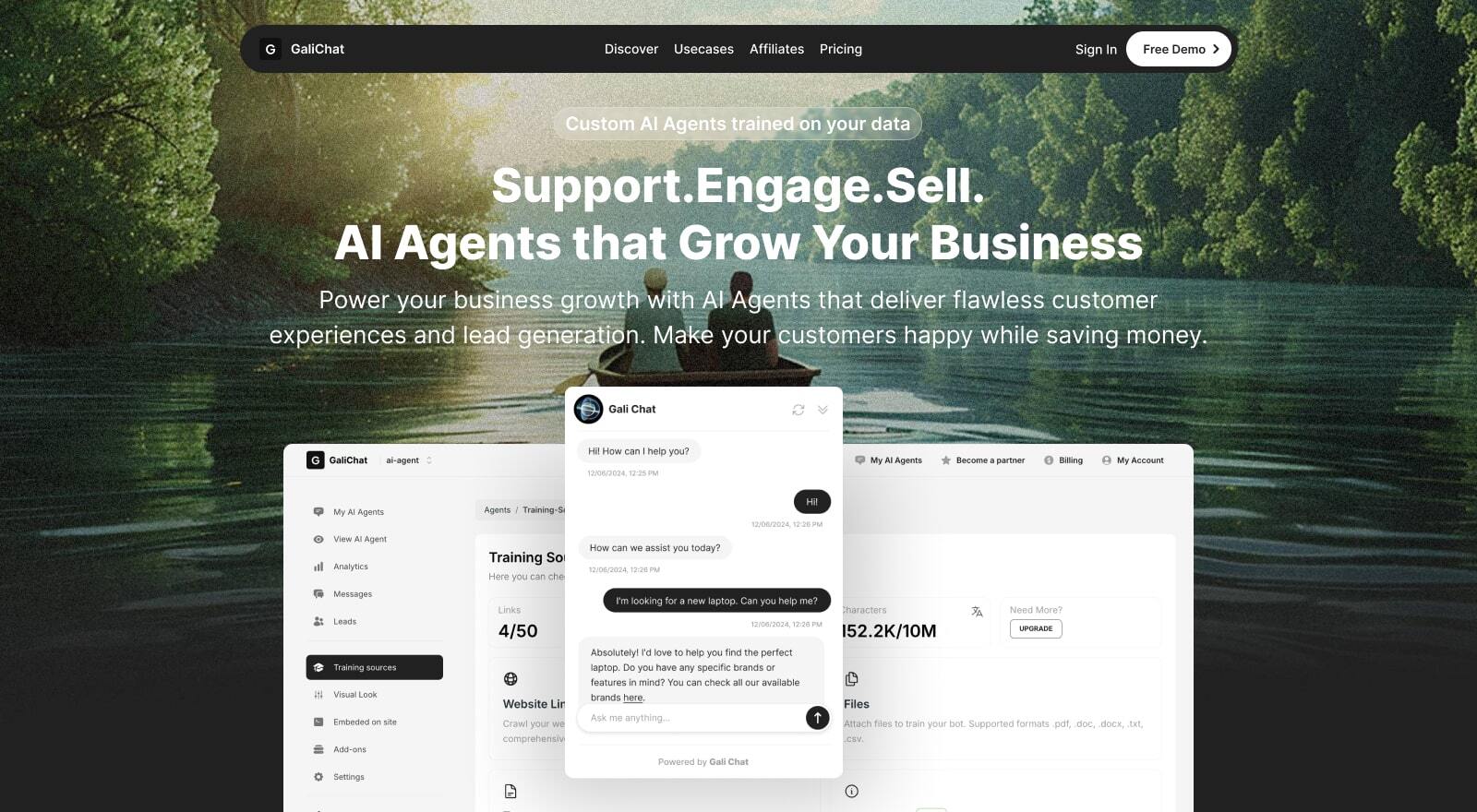
Power your business growth with AI Agents that deliver flawless customer experiences and lead generation. Make your customers happy while saving money.

Revscale’s AI agents supercharge inbound, outbound, and voice operations for SMBs, franchises, and other ambitious businesses. Try for free — automate growth today.
Run a free AEO + signal audit for your domain.
AI Answer Engine Optimization (AEO)
List once. Convert intent from live AI conversations without heavy integration.
AI Business Automation Services are specialized offerings that deploy artificial intelligence to take over and optimize repetitive operational workflows. They leverage technologies like machine learning, natural language processing, and robotic process automation to analyze complex data and make decisions. This enables businesses to achieve significant efficiency gains, reduce operational costs, and minimize human error in critical processes.
Experts assess existing manual or digital business processes to identify automation opportunities and establish clear implementation goals.
Providers build custom AI models, train them with relevant data sets, and seamlessly integrate them into the company's existing IT ecosystem.
The solution is launched, staff is trained, and the system is monitored and refined over time to adapt to evolving business needs.
AI automates fraud detection, loan application processing, and regulatory reporting, enhancing accuracy and drastically reducing processing times.
Dynamic pricing engines, personalized recommendation systems, and automated inventory management drive revenue growth and optimize stock levels.
Services automate patient record administration, assist in diagnostic imaging analysis, and optimize appointment scheduling and resource allocation.
Predictive maintenance, computer vision for quality control, and automated logistics planning maximize production uptime and operational efficiency.
Intelligent chatbots and voicebots handle inquiries 24/7, while sentiment analysis provides real-time feedback on customer satisfaction levels.
Bilarna evaluates every AI automation provider through a proprietary 57-point AI Trust Score assessing expertise, reliability, and client satisfaction. This involves rigorous checks on portfolio depth, client references, technical certifications, and compliance documentation. Continuous performance monitoring ensures only qualified partners remain listed on the marketplace.
Costs vary widely based on project scope, complexity, and the provider's engagement model. Projects can range from tens of thousands to several hundred thousand dollars. Pricing depends on factors like the required AI technology stack, integration effort, and the duration of maintenance agreements.
A typical implementation timeline ranges from three to nine months. The duration is determined by process complexity, the availability of high-quality training data, and the integration requirements with legacy systems.
Robotic Process Automation (RPA) follows rigid rules to mimic repetitive tasks, while AI automation is capable of learning and handling unstructured data. AI solutions can make judgment-based decisions, recognize patterns, and adapt to new scenarios, making them suitable for more complex workflows.
Primary benefits include drastically improved operational efficiency, significant cost reduction, and minimized human error. Businesses also gain valuable data-driven insights for strategic planning and can reallocate human talent to higher-value tasks.
Evaluate the provider's industry-specific experience, verifiable case studies, technical expertise in relevant AI frameworks, and proposed support structure. A transparent evaluation framework, like a comprehensive trust score, can significantly aid the comparison process.
Many health insurance plans now cover doula services, recognizing their value in supporting maternal health. Coverage can vary depending on the insurer and the specific plan, but it often includes prenatal visits, labor and delivery support, and postpartum care provided by certified doulas. Insurance coverage helps reduce out-of-pocket costs for families seeking holistic birth and postpartum support. It is advisable to check with your insurance provider to understand the extent of coverage and any requirements such as certification or referral needed to qualify for benefits.
Yes, electronic signatures are legally valid for most business contracts as long as they meet compliance requirements. They carry the same legal weight as handwritten signatures but offer additional benefits such as faster processing, enhanced security through encryption and authentication, and easier management. Digital signatures use cryptographic methods to verify identity and ensure tamper resistance. Modern electronic signature software provides audit trails and compliance with international standards, making electronic signatures enforceable and reliable for businesses handling contracts, NDAs, invoices, and other agreements.
Yes, business templates and contracts are fully customizable. To adapt them to your specific needs, follow these steps: 1. Download the template or contract after purchase. 2. Open the file in the compatible software, such as Notion or a word processor. 3. Review each section carefully and identify areas that require changes. 4. Edit text, fields, and sections to reflect your unique business details and requirements. 5. Save the customized version for your records. 6. Use the tailored document for your business operations, ensuring it meets your legal and organizational standards.
Yes, some online healthcare booking platforms offer benefits such as cashback when you book your medical appointments or procedures through them. Cashback offers can help reduce the overall cost of your healthcare expenses. These incentives encourage patients to use the platform for their healthcare needs, providing both convenience and financial savings.
Many point of sale software providers offer solutions without charging implementation fees. This means you can adopt the software without upfront costs related to installation or setup. However, it is important to review each provider's pricing plans carefully, as some may charge monthly fees or require purchasing hardware separately.
Fees for opening a business bank account vary depending on the bank and the type of account. Some banks offer free account opening promotions, especially for new businesses or startups. However, there may be other fees such as monthly maintenance charges, transaction fees, or charges for additional services. It is advisable to review the bank's fee schedule carefully and ask about any hidden costs before opening an account to ensure it fits your business budget.
No, there are no fees or credit score impacts when prequalifying for business capital offers. Follow these steps: 1. Submit your business information for prequalification. 2. Receive offers without any hidden fees. 3. Understand that your credit score will not be affected during this process. 4. Proceed with confidence knowing there is no waiting period or financial penalty.
Typically, after an initial trial period—often around seven days—business management software platforms do not charge monthly fees or enforce minimum usage requirements. Instead, continued use is contingent upon subscribing to a paid plan. This approach allows users to evaluate the software's features risk-free before committing financially. It is advisable to review the specific pricing details and terms on the provider's official website to understand any conditions related to payment plans, as these can vary between services.
No, there are no hidden fees for storage and last-mile delivery services. 1. The company uses a transparent pricing model. 2. Fees for these essential services are limited to what logistics partners charge. 3. No additional charges are added on top of partner fees. 4. Always verify pricing details by contacting the company directly to avoid surprises.
Typically, reputable early wage access and bill pay services do not charge hidden or late fees. They usually apply a small, transparent fee for accessing your wages early or splitting bills, which is clearly communicated upfront. Repayments are aligned with your payday to help you manage your finances without incurring additional penalties. However, it is important to review the terms and conditions of each service to understand any potential fees or charges before using them.