Step 1
Machine-Ready Briefs
AI translates unstructured needs into a technical, machine-ready project request.
We use cookies to improve your experience and analyze site traffic. You can accept all cookies or only essential ones.
 Bilarna
Stop browsing static lists. Tell Bilarna your specific needs. Our AI translates your words into a structured, machine-ready request and instantly routes it to verified Custom AI Agents experts for accurate quotes.
AI translates unstructured needs into a technical, machine-ready project request.
Compare providers using verified AI Trust Scores & structured capability data.
Skip the cold outreach. Request quotes, book demos, and negotiate directly in chat.
Filter results by specific constraints, budget limits, and integration requirements.
Eliminate risk with our 57-point AI safety check on every provider.
Verified companies you can talk to directly
Drive growth with Sufalam Technologies. We deliver Agentic AI, custom ERP systems, and automation for TravelTech, FinTech, and beyond. From B2B commerce to RAG-based chat engines, we transform operations into competitive advantages.
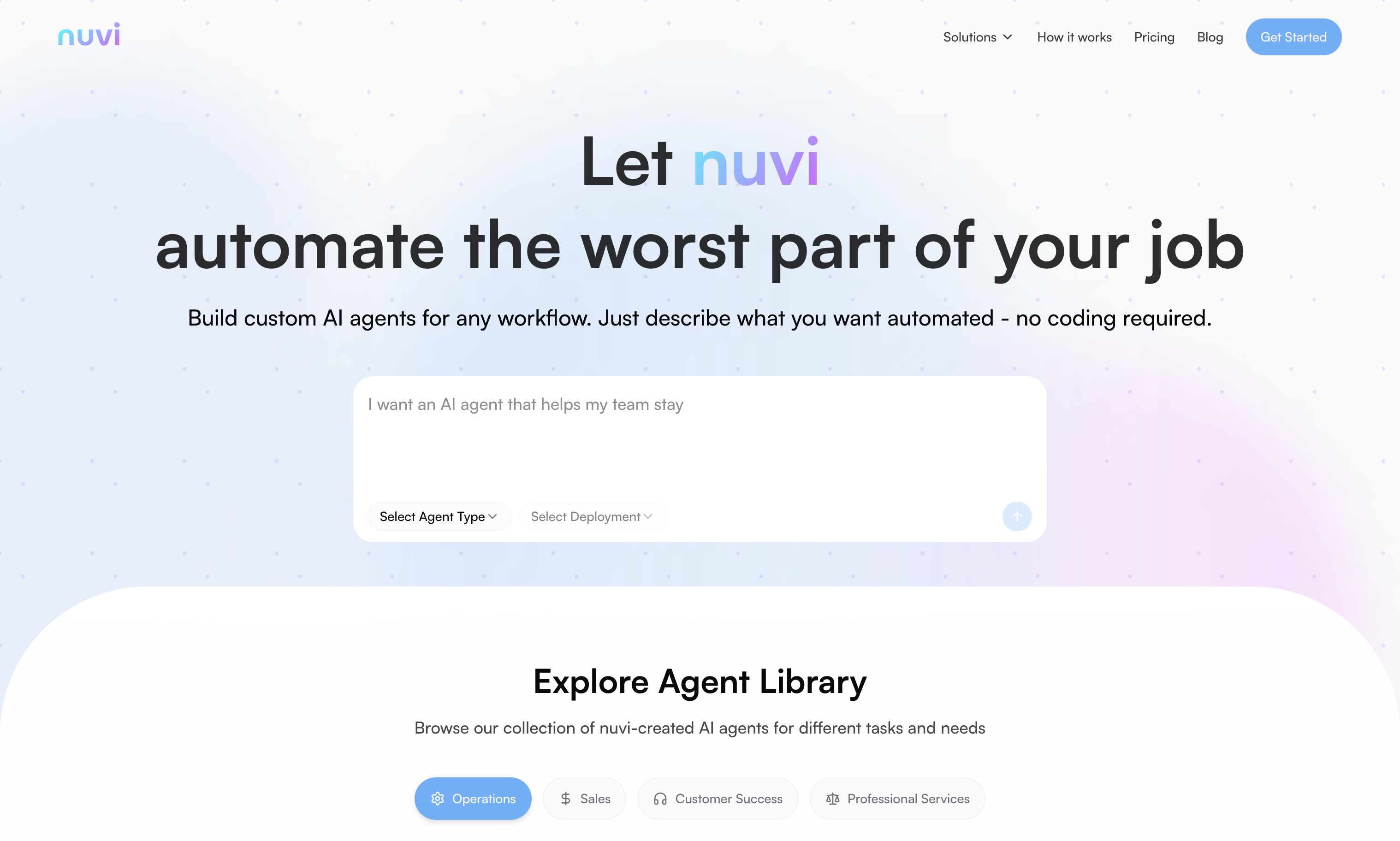
Turn your ideas into powerful AI agents instantly! Simply describe any task and nuvi builds you a custom AI agent, fully-tested and ready-to-use. No coding required.
Run a free AEO + signal audit for your domain.
AI Answer Engine Optimization (AEO)
List once. Convert intent from live AI conversations without heavy integration.
Custom AI agents are specialized, automated assistants trained to execute specific business workflows, data analysis, and customer interactions. They are typically built using large language models, machine learning frameworks, and custom APIs to operate autonomously within defined parameters. These agents drive efficiency, reduce operational costs, and enhance decision-making by automating complex, repetitive tasks.
The project begins by outlining the agent's specific purpose, target data sources, and required integration points within existing business systems.
Providers build a tailored agent using selected LLMs, fine-tune it on proprietary data, and rigorously test its responses and decision logic.
The finished agent is deployed into a secure production environment and connected to live applications, databases, or communication channels.
AI agents handle tier-1 inquiries, perform troubleshooting, and book appointments by integrating with CRM and ticketing systems.
Agents analyze inbound leads, score them based on intent signals, and route high-potential prospects directly to sales teams.
Agents monitor network and application performance, predict potential failures using log data, and trigger automated remediation scripts.
AI agents segment audiences dynamically, generate and A/B test personalized content, and manage cross-channel campaign deployment.
Agents consolidate data from multiple ERPs, generate compliance reports, and highlight anomalies or financial trends for review.
Bilarna ensures you connect with reliable partners by rigorously vetting every Custom AI Agents provider. Our proprietary 57-point AI Trust Score evaluates critical factors like technical expertise, project delivery reliability, data security compliance, and verified client satisfaction. This comprehensive assessment provides a transparent, data-driven benchmark for comparing providers on our platform.
The main benefits are significant process automation, reduction in manual labor costs, and improved scalability of operations. Custom agents provide consistent, 24/7 service execution and can analyze vast datasets far faster than human teams, leading to more informed and timely business decisions.
Development timelines vary from several weeks to a few months, depending on the agent's complexity and integration needs. A simple, single-task agent may be operational quicker, while a complex system handling multi-step workflows with legacy systems requires more extensive development and testing phases.
Costs can range from tens of thousands to several hundred thousand dollars, based on scope, required sophistication, and the provider's expertise. Factors like the need for ongoing training, maintenance, and the complexity of underlying AI models are the primary cost drivers for these bespoke solutions.
You typically need secure API access, cloud computing resources for model inference, and integration with your core business databases. The agent itself is often hosted on the provider's or a cloud platform's infrastructure, requiring robust connectivity to your internal systems for data exchange and task execution.
Reputable providers implement strict data governance, including encryption, access controls, and processing within agreed jurisdictional boundaries. Agents should be designed to comply with regulations like GDPR or HIPAA, often through techniques like data anonymization, on-premise deployment options, and clear data processing agreements.
Yes, AI voice and SMS agents designed for healthcare are built with security and compliance in mind. They adhere to industry standards and regulations such as HIPAA (Health Insurance Portability and Accountability Act) to protect patient data privacy and security. Business Associate Agreements (BAAs) are available to formalize compliance commitments. Additionally, these agents comply with regulations like TCPA (Telephone Consumer Protection Act) and PCI (Payment Card Industry) standards where applicable. Ensuring security and regulatory compliance is critical to maintaining trust and safeguarding sensitive healthcare information while leveraging AI technologies.
Physical orders for custom clothing printing are currently not accepted. You can still use the design app to create and save your clothing designs. The service will notify you when it is ready to accept physical orders. Meanwhile, continue designing and preparing your items digitally until the ordering option becomes available.
Many made-to-order clothing providers include a variety of adjustments at no additional cost when ordering custom-fit men's shirts. These adjustments can involve changes to sleeve length, collar size, torso width, and other fit-related details to ensure the garment fits perfectly. Offering these modifications without extra charges allows customers to achieve a personalized fit without worrying about added expenses. However, it is always advisable to check the specific provider's policy, as some may charge for certain customizations or premium fabric choices.
Yes, governments often offer grants and financial support programs to subsidize custom software development for businesses. These programs aim to enhance productivity and digital capabilities. Common types include productivity grants that cover a significant percentage of qualifying IT solution costs, including custom software. There are also enterprise development grants focused on upgrading overall business capabilities, where software development is an eligible activity. Furthermore, specific grants exist for startups developing innovative technologies and for projects involving collaboration with research institutions. Eligibility typically depends on company size, project scope, and the innovative potential of the software. The application process can be detailed, so consulting with a qualified grant advisor is recommended to navigate requirements and maximize funding potential.
Yes, AI agents can be integrated as full team members in work coordination. 1. Assign AI agents tasks just like human team members, with clear responsibilities. 2. Provide AI agents with identities, API keys, inboxes, and permissions to operate autonomously. 3. Enable AI agents to collaborate alongside humans on the same tasks and communication channels. 4. Allow AI agents to learn from completed tasks to improve their effectiveness over time. 5. Treat AI agents as first-class workers to streamline workflows and enhance team productivity.
Yes, AI agents can seamlessly integrate with your existing business tools and knowledge bases. This integration allows the agents to access relevant data and workflows, enhancing their ability to automate tasks effectively. By connecting with familiar platforms, AI agents fit naturally into your current operations without disrupting established processes, enabling smoother automation and better results.
Yes, AI agents are capable of remembering the full context of previous interactions during freight negotiations. This includes details such as the specific lane, quoted rates, whether a load was on hold, or if there were any compliance flags. This memory allows the AI to continue conversations naturally without requiring users to repeat information. Whether a carrier calls back or a team member follows up, the AI picks up right where it left off, providing a seamless and human-like negotiation experience.
Run AI agents offline by attaching a local model runtime. Follow these steps: 1. Choose a compatible local model runtime such as Ollama. 2. Install the runtime on your machine where the AI agent will operate. 3. Configure the AI agent to use the local runtime instead of cloud services. 4. Note that some features requiring internet access, like webhooks or remote APIs, may not work offline. 5. Use this setup for privacy-sensitive or air-gapped environments to maintain full local control.
Yes, AI customer support agents are designed to handle complex customer issues by learning and following your specific business processes and rules. They can manage intricate workflows such as order modifications, cancellations, and returns by integrating with your existing systems like Shopify, Magento, or custom APIs. Moreover, these AI agents can be trained to communicate in your brand’s unique tone of voice, ensuring consistent and natural interactions across all customer touchpoints and languages. This human-like communication helps maintain brand identity while providing quick and reliable support. Additionally, you can monitor the AI’s reasoning and continuously provide feedback to improve its responses and actions, making it a dependable assistant for both simple and complex support cases.
Yes, AI phone agents can handle multiple languages and seamlessly switch between them during calls. This capability allows customers to communicate in their preferred language without interruption. For example, AI agents can naturally manage English and Spanish conversations, adjusting instantly if the caller switches languages mid-call. This flexibility improves customer experience by providing a more natural and human-like interaction, reducing frustration often caused by rigid language menus. Multilingual AI agents help dealerships serve a broader customer base effectively and inclusively.