Step 1
Machine-Ready Briefs
AI translates unstructured needs into a technical, machine-ready project request.
We use cookies to improve your experience and analyze site traffic. You can accept all cookies or only essential ones.
 Bilarna
Stop browsing static lists. Tell Bilarna your specific needs. Our AI translates your words into a structured, machine-ready request and instantly routes it to verified AI Workflow Automation experts for accurate quotes.
AI translates unstructured needs into a technical, machine-ready project request.
Compare providers using verified AI Trust Scores & structured capability data.
Skip the cold outreach. Request quotes, book demos, and negotiate directly in chat.
Filter results by specific constraints, budget limits, and integration requirements.
Eliminate risk with our 57-point AI safety check on every provider.
Verified companies you can talk to directly
Empresa especializada en desarrollo de software web y aplicaciones móviles con 10 años de experiencia. Gestores, e-commerce, WordPress, Shopify, Moodle y desarrollo a medida.

Nightcoders provides mobile app development, web development, and AI automation for organizations in San Diego, Orange County, Los Angeles, and nationwide.
Heed AI Solutions helps businesses from Bakersfield to San Diego, Santa Barbara to Palm Springs find where AI fits and build workflows that actually work. AI consulting, training, and implementation for Southern California SMBs.

Creative agency Solar Digital: development of websites, logos, mobile applications, branding

Deploy AI-assisted workflows with Telnyx Flow, a low-code, drag-and-drop interface. Easily integrate AI and communications suite for next-gen apps.
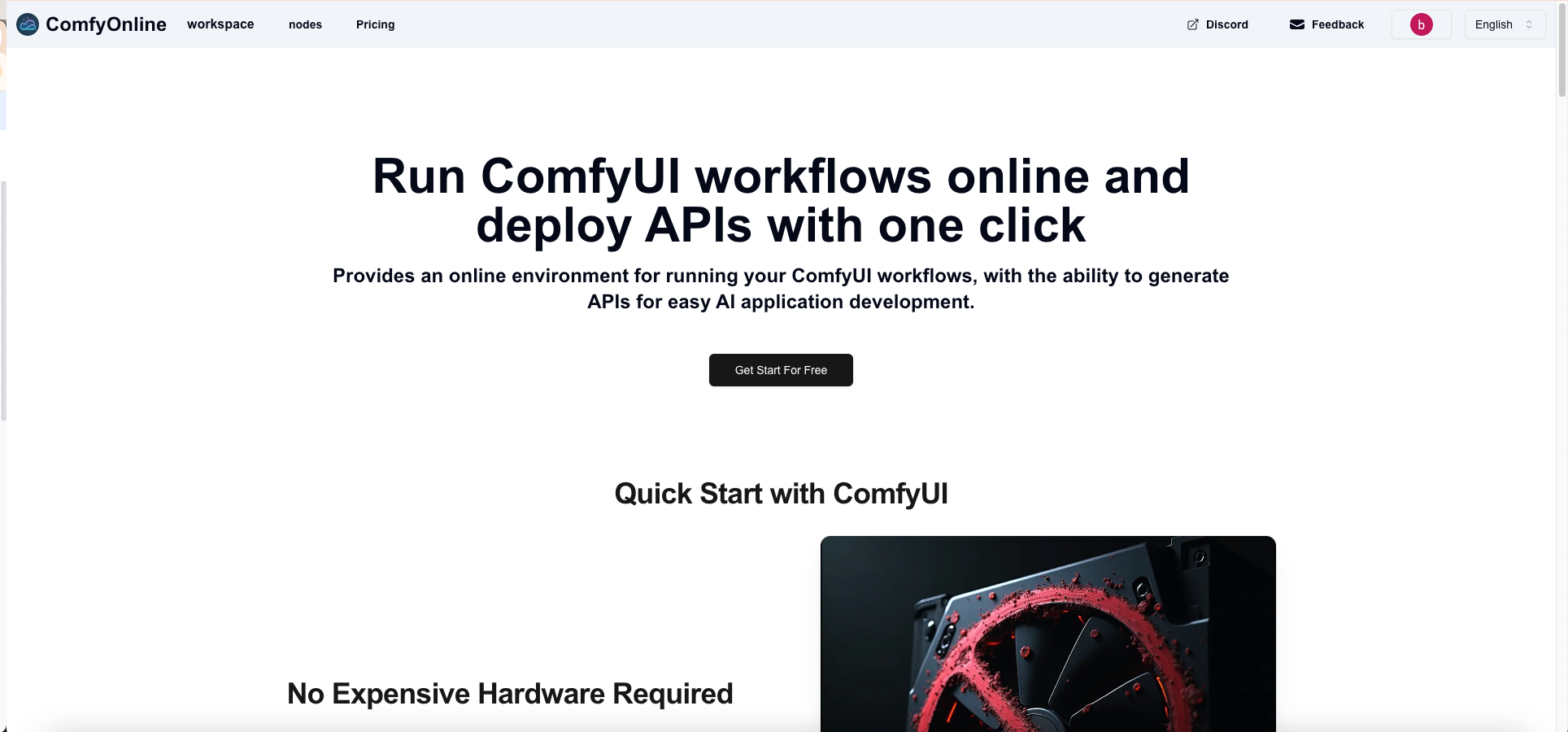
Provides an online environment for running your ComfyUI workflows, with the ability to generate APIs for easy AI application development.
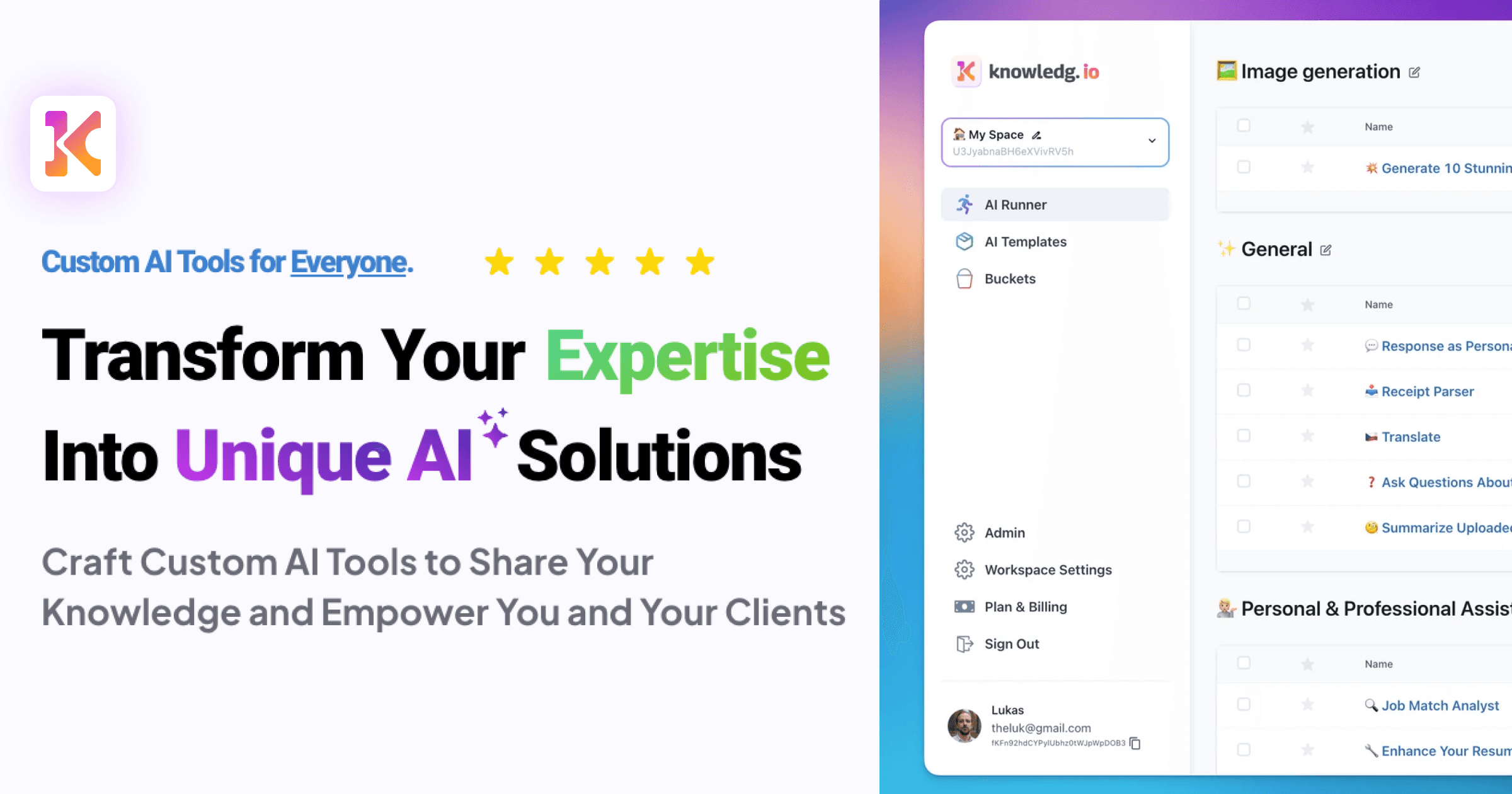
Discover Knowledgio, a no-code software that easily lets you build and share AI tools. Learn how to use AI tools to make money, explore the best AI writing tools, and more. Start your AI journey today!
Run a free AEO + signal audit for your domain.
AI Answer Engine Optimization (AEO)
List once. Convert intent from live AI conversations without heavy integration.
AI workflow automation is the integration of artificial intelligence, including machine learning and natural language processing, to autonomously manage, execute, and optimize multi-step business processes. It goes beyond simple rule-based bots by analyzing context, making data-driven decisions, and adapting to new scenarios in real time. This capability significantly reduces operational overhead, minimizes human error, and unlocks new efficiencies across departments.
Existing manual or semi-automated workflows are analyzed to identify repetitive tasks, decision points, and data handoffs suitable for AI intervention.
AI agents or software platforms are configured to handle tasks like data entry, document routing, customer query resolution, and predictive maintenance.
The system learns from outcomes, provides analytics on process performance, and suggests further refinements to enhance speed and accuracy over time.
Automates fraud detection, loan application processing, and regulatory compliance reporting, ensuring speed and adherence to complex financial regulations.
Streamlines patient appointment scheduling, insurance claim processing, and medical record data extraction, reducing administrative burdens on clinical staff.
Orchestrates inventory management, personalized marketing campaigns, and dynamic customer support routing based on purchase history and browsing behavior.
Optimizes predictive maintenance schedules, automates quality control inspections, and manages just-in-time inventory logistics using sensor data and forecasts.
Personalizes the user activation journey through automated tutorial delivery, usage milestone tracking, and proactive support ticket creation for at-risk users.
Bilarna evaluates every AI workflow automation provider against a proprietary 57-point AI Trust Score. This comprehensive assessment rigorously reviews technical expertise, project delivery track records, client satisfaction scores, and adherence to data security and compliance standards. We continuously monitor provider performance to ensure our marketplace lists only reliable and results-driven partners.
Costs vary widely based on complexity, ranging from $20,000 for departmental tools to $500,000+ for enterprise-wide platforms. Key factors include software licensing, integration needs, customization, and ongoing training and support, making it essential to get detailed quotes for comparison.
Traditional Robotic Process Automation (RPA) follows strict, predefined rules to automate repetitive tasks. AI workflow automation incorporates machine learning to handle unstructured data, make context-aware decisions, and adapt processes dynamically, managing complex, cognitive tasks beyond simple rule-based execution.
A focused pilot project can go live in 4-8 weeks, while a comprehensive enterprise rollout may take 6-12 months. The timeline depends on process complexity, data readiness, integration with existing systems, and the level of customization required for the AI models.
Common pitfalls include overlooking the provider's experience with your specific industry data, underestimating change management and internal training needs, and choosing a platform that cannot scale or integrate with your existing enterprise software stack.
Businesses typically see a 40-70% reduction in process handling time, a 60-80% decrease in manual errors, and significant cost savings within 12-18 months. Tangible returns also include improved employee satisfaction by eliminating mundane tasks and enhanced customer experience through faster service.
Yes, automation tools are designed to handle complex multi-page forms effectively. They can reliably navigate through multiple pages, input data accurately, and manage conditional logic or validations that forms may require. This capability reduces the risk of human error and speeds up the completion process. By automating form filling, businesses can ensure consistency and accuracy in data entry, especially when dealing with large volumes of forms or repetitive tasks. This is particularly useful in sectors like healthcare, finance, and insurance where form accuracy is critical.
Yes, financial automation solutions are often modular and customizable to fit the specific needs of different businesses. Organizations can select and adapt only the modules they require, such as accounts payable, accounts receivable, billing, or treasury management, allowing them to scale their automation at their own pace. This flexibility ensures that companies can address their unique operational challenges without unnecessary complexity or cost. Additionally, user-friendly tools and AI capabilities enable teams to maintain compliance and efficiency while tailoring the system to their workflows. Customized onboarding and collaborative support further help businesses get up and running quickly with solutions that match their requirements.
AI legal assistants typically do not require new software installation or changes to existing workflows. They are designed to integrate seamlessly with current systems, allowing legal teams to adopt the technology without disrupting their established processes. This ease of integration helps minimize training time and resistance to change. Furthermore, many AI legal tools operate via familiar platforms such as email, making them accessible and convenient for users. This approach ensures that legal professionals can benefit from AI capabilities while maintaining compliance with industry standards and regulations.
No, you do not need technical skills or a developer to implement business automation. Modern automation services are designed to be managed by business users and process owners. The implementation typically involves you describing your business workflows and goals in plain language to a specialist or through a guided platform. The service provider then handles the technical translation, system configuration, and integration work. This approach allows you to focus on defining the desired outcomes while experts manage the underlying technology. Many platforms also offer no-code or low-code visual builders that enable users to design and modify automations using drag-and-drop interfaces, making the technology accessible without programming knowledge.
Creating automation workflows for desktop applications typically requires some basic technical skills, mainly the ability to write simple code snippets. However, many modern automation platforms allow users to describe workflows in plain English or natural language, making it easier for those with limited coding experience. The automation engine then interprets these instructions to perform tasks such as opening applications, entering data, or extracting information. This approach lowers the barrier to entry, enabling developers and automation engineers to quickly build and trigger workflows without deep programming knowledge.
No, you generally do not need technical skills to use an AI-based accounting automation tool. These platforms are designed with user-friendly interfaces tailored for accountants and finance teams rather than IT specialists. They often include guided workflows and step-by-step instructions to help users connect their tax portals, configure settings, and review automated data entries. The artificial intelligence component works in the background to classify and suggest accounting data, while users maintain control over final approvals. This approach ensures that even those without technical expertise can efficiently automate invoice processing and improve accuracy.
No, you do not need technical skills to use an AI-based invoice automation tool. These platforms are designed with user-friendly interfaces tailored for accountants and finance teams rather than IT specialists. The software typically guides users step-by-step through the setup and daily operations, making it accessible even for those without a technical background. The artificial intelligence handles complex tasks like data classification and error detection automatically, allowing users to focus on reviewing and approving the processed invoices with confidence.
AI workflow automation in healthcare does not require traditional integration with existing electronic medical record (EMR) systems. Instead of relying on APIs or custom development, AI interacts with EMR software by mimicking human actions such as clicking, typing, and navigating interfaces. This approach allows the AI to work seamlessly with any EMR system or portal, including popular platforms like Epic, Cerner, and athenahealth. As a result, clinics can deploy automation solutions quickly without lengthy IT projects or vendor approvals.
AI agent development involves creating autonomous software programs that perceive their environment, make decisions, and take actions to achieve specific business goals without constant human intervention. The process starts with defining clear objectives, such as automating customer service inquiries, processing invoices, or managing inventory. Developers then design the agent's architecture, which typically includes modules for perception (understanding data), reasoning (making decisions using models like LLMs), and action (executing tasks via APIs). These agents are trained on relevant enterprise data and integrated into existing systems like CRM or ERP platforms. Upon deployment, they operate 24/7, handling repetitive tasks, providing instant responses, and generating insights. Successful deployment leads to dramatic increases in operational speed, significant cost reductions by automating up to 90% of routine tasks, and allows human employees to focus on higher-value strategic work.
A commercial real estate platform can significantly improve brokers' workflow by centralizing property data and client information in one accessible location. It streamlines communication through integrated messaging and CRM tools, reducing the need for multiple applications. Automated processes such as listing updates, appointment scheduling, and document management save time and reduce errors. Additionally, data analytics features provide brokers with market trends and insights, enabling better decision-making. Overall, these capabilities help brokers manage their tasks more efficiently, close deals faster, and enhance client satisfaction.