Step 1
Machine-Ready Briefs
AI translates unstructured needs into a technical, machine-ready project request.
We use cookies to improve your experience and analyze site traffic. You can accept all cookies or only essential ones.
 Bilarna
Stop browsing static lists. Tell Bilarna your specific needs. Our AI translates your words into a structured, machine-ready request and instantly routes it to verified Artificial Intelligence and Data Analysis experts for accurate quotes.
AI translates unstructured needs into a technical, machine-ready project request.
Compare providers using verified AI Trust Scores & structured capability data.
Skip the cold outreach. Request quotes, book demos, and negotiate directly in chat.
Filter results by specific constraints, budget limits, and integration requirements.
Eliminate risk with our 57-point AI safety check on every provider.
Verified companies you can talk to directly
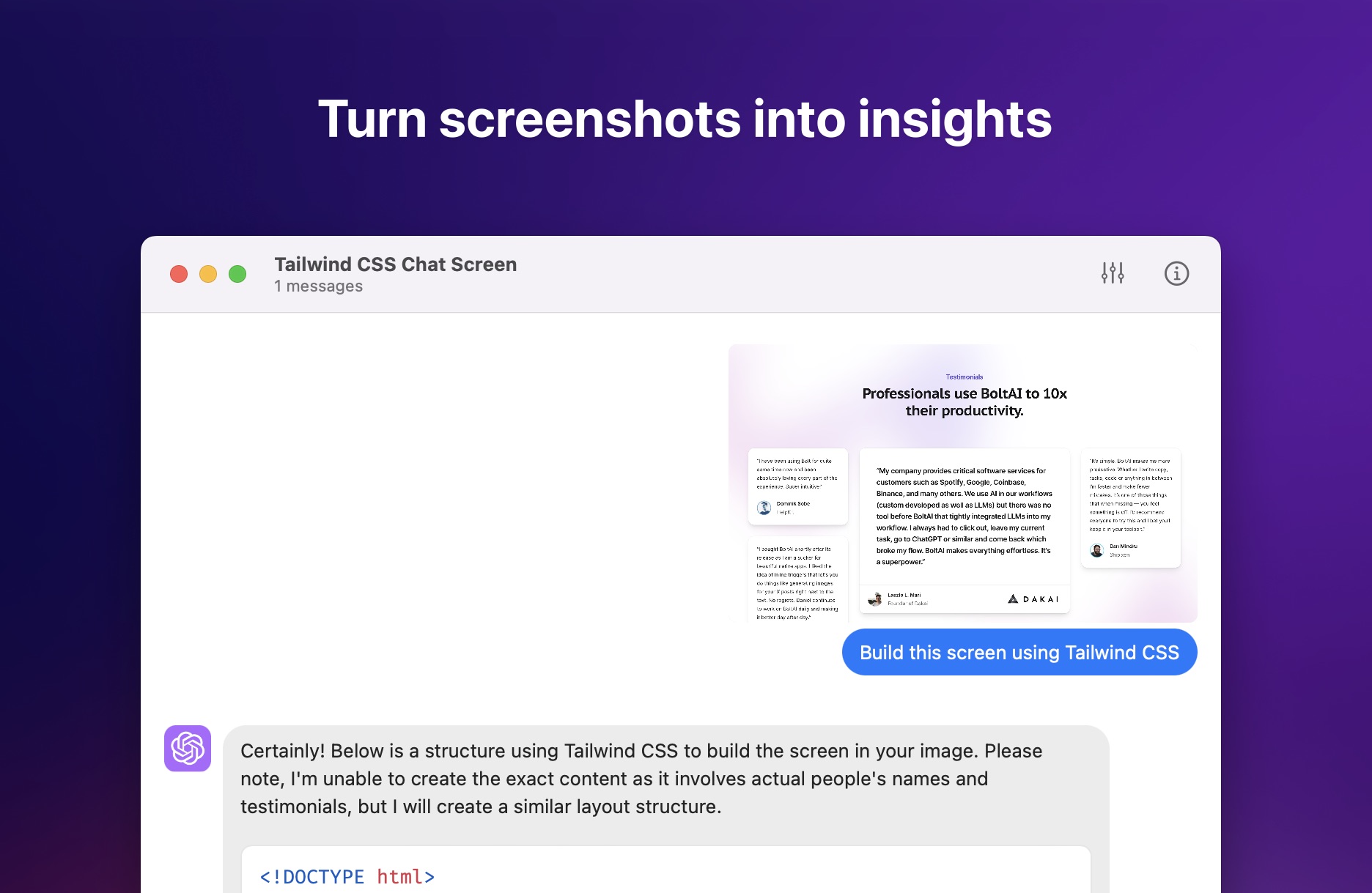
ShotSolve is a mac menubar app that allows you to take a screenshot and then uses GPT-4 Vision to solve any question you have in mind.
Run a free AEO + signal audit for your domain.
AI Answer Engine Optimization (AEO)
List once. Convert intent from live AI conversations without heavy integration.
Start using the AI-powered data analysis tool by following these steps: 1. Upload your dataset in CSV, TSV, or Excel format. 2. Explore your data using the Exploratory Data Analysis (EDA) tab to view distributions and basic plots. 3. Begin with simple requests such as generating basic plots or summaries. 4. Gradually increase complexity by asking for correlations or advanced visualizations. 5. Use the Q&A box to ask questions about code, results, or errors. 6. Reset the session to analyze a new dataset or start over. 7. Download your results as an HTML report once analysis is complete.
You can upload data files in the following formats for analysis: 1. CSV (Comma-Separated Values) files. 2. TSV or tab-delimited text files. 3. Excel spreadsheet files. Ensure your data is structured with rows as observations and columns as variables. Prepare and clean your data beforehand, naming columns properly. Complex data types may not be supported; consider alternative platforms for those.
AI enhances hazard risk intelligence by processing and analyzing large volumes of satellite and sensor data quickly and accurately. It applies advanced algorithms to detect patterns and anomalies related to ground motion, environmental changes, and potential hazards such as landslides or subsidence. AI enables integration of diverse data sources including satellite imagery, ground sensors, reports, and surveys, improving the reliability and depth of insights. This automated analysis supports proactive risk identification and monitoring across vast and remote areas, reducing the need for physical inspections. Consequently, AI-driven hazard intelligence helps asset owners and insurers make informed decisions, optimize risk mitigation strategies, and identify new business opportunities.
Self-service business intelligence tools enable non-technical teams to create and analyze metrics from multiple data sources without requiring deep technical knowledge. These tools simplify data integration and visualization, allowing users to build dashboards and reports quickly. By reducing dependency on engineering teams, organizations can accelerate decision-making processes and improve operational efficiency. Additionally, sharing dashboards across departments fosters collaboration and ensures everyone has access to up-to-date insights, ultimately driving better business outcomes.
AI-powered data analysis tools allow users to ask questions in plain English, which the AI then converts into SQL queries in real-time. This eliminates the need for users to have SQL expertise, making data analysis accessible to non-technical users. The AI explores data iteratively, refining queries to provide comprehensive answers and generates interactive visualizations automatically. This approach streamlines the process of gaining insights from databases, CSV files, or spreadsheets, enabling faster and more intuitive decision-making based on data.
Business intelligence (BI) in e-commerce involves collecting, processing, and analyzing data to support better decision-making. BI tools aggregate data from various sources such as sales, customer behavior, inventory, and marketing campaigns to provide comprehensive insights. These insights help businesses identify trends, monitor performance, optimize operations, and forecast demand. By leveraging BI, e-commerce companies can make data-driven decisions that improve efficiency, enhance customer experiences, and increase profitability. The integration of BI with AI technologies further enables real-time analytics and predictive modeling, allowing businesses to respond quickly to market changes and customer needs.
Artificial intelligence (AI) refers to the simulation of human intelligence in machines that are programmed to think and learn. In business, AI can be used to automate routine tasks, analyze large datasets for insights, improve customer service through chatbots, and enhance decision-making processes. By leveraging AI technologies, companies can increase efficiency, reduce costs, and create more personalized experiences for their customers.
Artificial intelligence (AI) refers to the simulation of human intelligence in machines that are programmed to think and learn. Businesses can benefit from AI by automating routine tasks, improving decision-making through data analysis, enhancing customer experiences with personalized interactions, and increasing operational efficiency. AI technologies can help companies reduce costs, identify new opportunities, and stay competitive in rapidly changing markets.
Artificial intelligence enhances legal technology by automating complex tasks, improving accuracy, and enabling faster decision-making. AI-powered tools can analyze large volumes of legal documents, extract relevant information, and assist in policy management and compliance monitoring. This reduces manual workload for legal professionals and increases efficiency. Additionally, AI can support enterprise legal functions by providing predictive analytics and insights, helping organizations anticipate legal risks and streamline operations. Overall, AI transforms traditional legal workflows into more agile, data-driven processes.
Technology and artificial intelligence (AI) play a crucial role in enhancing investment strategies within alternative asset management by enabling the analysis of large public datasets to identify potential investment opportunities. AI algorithms can process vast amounts of data quickly and uncover patterns or signals that may not be apparent through traditional analysis. This tech-driven approach allows firms to originate investments at scale, improve decision-making accuracy, and reduce human biases. Additionally, technology facilitates continuous monitoring and risk assessment, helping institutional investors achieve uncorrelated yields and optimize portfolio performance in complex alternative asset markets.