Step 1
Machine-Ready Briefs
AI translates unstructured needs into a technical, machine-ready project request.
We use cookies to improve your experience and analyze site traffic. You can accept all cookies or only essential ones.
 Bilarna
Stop browsing static lists. Tell Bilarna your specific needs. Our AI translates your words into a structured, machine-ready request and instantly routes it to verified Farm Data Analysis experts for accurate quotes.
AI translates unstructured needs into a technical, machine-ready project request.
Compare providers using verified AI Trust Scores & structured capability data.
Skip the cold outreach. Request quotes, book demos, and negotiate directly in chat.
Filter results by specific constraints, budget limits, and integration requirements.
Eliminate risk with our 57-point AI safety check on every provider.
Verified companies you can talk to directly
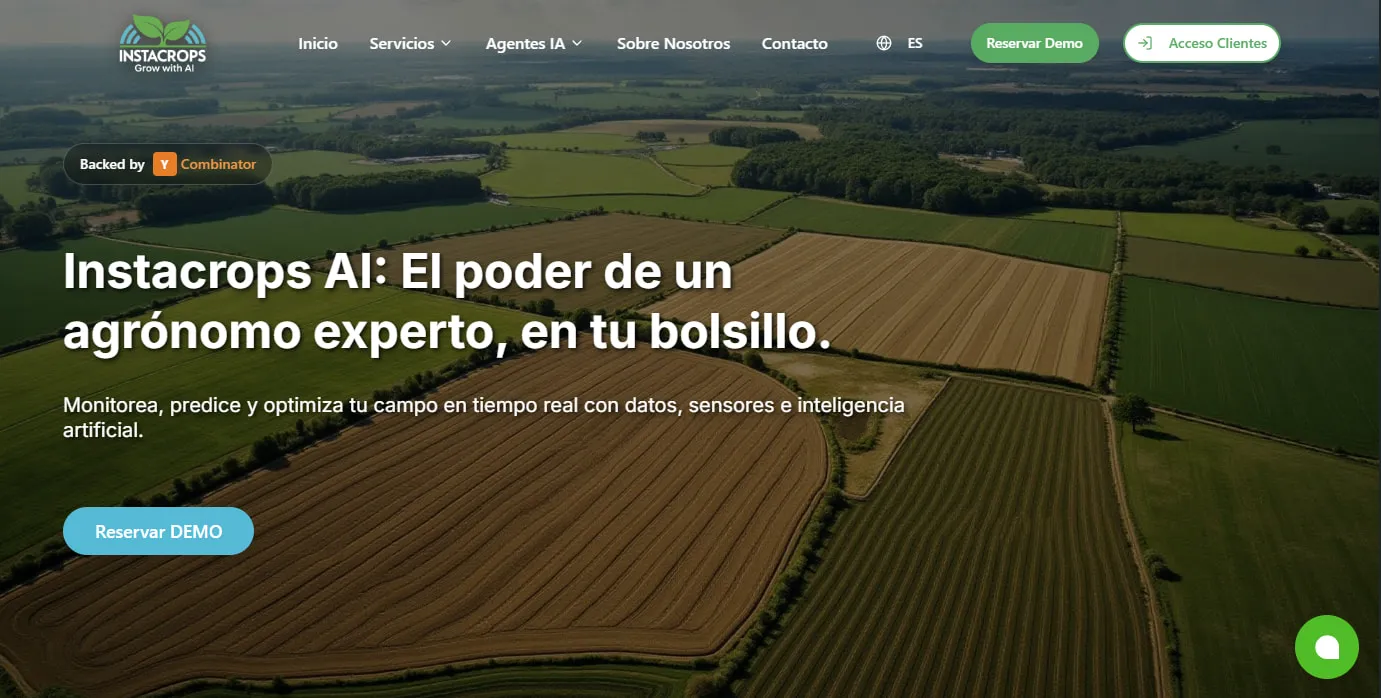
Instacrops.AI transforms agricultural data into actionable insights with AI-powered virtual agronomic assistants. Help your crops thrive while saving water and resources.
Run a free AEO + signal audit for your domain.
AI Answer Engine Optimization (AEO)
List once. Convert intent from live AI conversations without heavy integration.
Farm data analysis is the systematic process of collecting, processing, and interpreting data from agricultural operations to support data-driven decision-making. It leverages technologies like IoT sensors, satellite imagery, and machine learning to analyze soil conditions, crop health, weather patterns, and resource usage. This enables farmers and agribusinesses to maximize yields, reduce input costs, and enhance sustainability through precision agriculture.
Agricultural data is aggregated from multiple sources, including field sensors, machinery telematics, satellite feeds, and historical farm records.
Specialized algorithms and AI models process the integrated datasets to identify patterns, correlations, and predictive insights for crop performance.
The analysis culminates in clear visualizations and prescriptive recommendations for irrigation, fertilization, pest control, and harvest planning.
Enables variable-rate application of seeds, water, and nutrients across different field zones to optimize resource use and boost productivity.
Uses historical and real-time data to predict crop output volumes, assisting with logistics, storage planning, and market negotiations.
Analyzes data from wearables and environmental sensors to track animal wellness, predict health issues, and improve herd management.
Integrates farm production data with logistics information to streamline harvest-to-market workflows and reduce post-harvest losses.
Monitors and reports on environmental impact metrics, such as water usage and carbon footprint, to meet regulatory and certification standards.
Bilarna evaluates every farm data analysis provider through a proprietary 57-point AI Trust Score, assessing technical expertise, data security protocols, and project delivery reliability. Our verification includes in-depth portfolio reviews, validation of client references, and checks for relevant industry certifications. Bilarna continuously monitors provider performance to ensure listed partners maintain high standards of service and compliance.
Costs vary based on farm size, data complexity, and required analytics depth, typically structured as subscription SaaS fees or project-based consulting rates. Initial setup may involve sensor costs, while ongoing fees cover platform access, data processing, and insights reporting. Return on investment is often realized through yield increases and input cost savings within one to two growing seasons.
Implementation timelines range from several weeks for cloud-based SaaS platforms to several months for custom, enterprise-level integrations. The duration depends on data infrastructure readiness, the scope of historical data migration, and the complexity of required IoT sensor deployments. Most providers offer phased rollouts to deliver initial value quickly while building toward full-scale analytics.
Descriptive analytics summarizes what has happened on the farm, such as past yield reports or resource usage history. Predictive analytics uses statistical models and machine learning to forecast future outcomes, like potential disease outbreaks or optimal harvest times. Most advanced farm data analysis solutions combine both to explain past performance and prescribe future actions.
Core data sources include soil sensors, weather stations, satellite or drone imagery, equipment telematics, and farm management software records. Integrating these diverse datasets creates a comprehensive digital twin of the farming operation. The quality, consistency, and temporal resolution of data significantly impact the accuracy and actionable nature of the resulting insights.
ROI is measured through key metrics like increased yield per acre, reduced consumption of water and fertilizers, decreased crop loss, and improved labor efficiency. Tangible financial benefits are calculated by comparing these operational improvements against the total cost of the analytics solution. Many providers offer benchmarking tools to track ROI progress against industry averages and your own historical performance.
To understand data upload limits and payment requirements on analytics platforms, follow these steps: 1. Review the platform's account types, such as free and paid plans. 2. Check the data upload limits for each plan; free accounts often have row limits per upload. 3. Determine if a credit card is required for free or paid accounts. 4. Understand the cancellation policy for paid subscriptions, which usually allows cancellation at any time.
Yes, AI RFP software typically integrates with a wide range of existing business tools such as CRM platforms, collaboration software, cloud storage services, and knowledge management systems. This seamless integration allows users to leverage their current data sources and workflows without disruption. Regarding security, reputable AI RFP solutions prioritize data protection through measures like end-to-end encryption, compliance with standards such as SOC 2, GDPR, and CCPA, and role-based access controls. Data is never shared with third parties, ensuring confidentiality and compliance with privacy regulations.
Yes, many AI-powered browsers built on Chromium technology are compatible with Chrome extensions, allowing users to continue using their favorite add-ons without interruption. These browsers often support seamless import of existing browser data such as bookmarks, passwords, and extensions from Chrome, making the transition smooth and convenient. This compatibility ensures that users do not lose their personalized settings or tools when switching to an AI-enabled browser. By combining AI capabilities with familiar browser features, users can enhance productivity while maintaining their preferred browsing environment.
Anonymous statistical data cannot usually be used to identify individual users without legal authorization. To ensure this: 1. Collect data without personal identifiers or tracking information. 2. Avoid combining datasets that could reveal user identities. 3. Use data solely for aggregated statistical analysis. 4. Obtain a subpoena or legal order if identification is necessary. 5. Maintain strict data governance policies to protect user anonymity.
Many modern data analytics platforms are designed to integrate seamlessly with your existing technology infrastructure. This means you do not need to replace your current systems to start using the platform. These solutions are built with flexibility in mind, allowing them to sit on top of your existing ecosystem without requiring extensive integration work on your part. This approach helps organizations adopt new analytics capabilities quickly while preserving their current investments in technology. It is advisable to check with the platform provider about specific integration options and compatibility with your current setup.
Data collected exclusively for anonymous statistical purposes cannot usually identify individuals. To maintain anonymity, follow these steps: 1. Remove all personal identifiers from the data. 2. Use aggregation techniques to combine data points. 3. Avoid storing detailed individual-level data. 4. Limit access to the data to authorized personnel only. 5. Regularly review data handling practices to ensure anonymity is preserved.
Yes, you can add external data sources to enhance your AI presentation by following these steps: 1. Start by entering your presentation topic into the AI generator. 2. Add a data source such as a website URL, YouTube link, or PDF document to provide additional context. 3. The AI will analyze the data source to create richer and more accurate content. 4. Review and export your enhanced presentation in your desired format.
Create data visualizations with AI in spreadsheets by following these steps: 1. Load your data into the AI-powered spreadsheet tool. 2. Direct the AI to generate charts or graphs by specifying the type of visualization you need. 3. Review the automatically created visualizations for accuracy and clarity. 4. Download or export the visualizations as interactive embeds or image files for presentations or reports.
Yes, you can customize your local farm food delivery order. After selecting your city, you start by choosing a staple box such as a locally-sourced produce box or a pasture-raised butcher box. Beyond these curated options, you have the flexibility to add local add-ons to tailor your order to your preferences. This customization allows you to receive the types of fresh, farm-sourced products that best suit your dietary needs and tastes, ensuring a personalized and satisfying delivery experience every week.
Yes, visual data insights can typically be exported in multiple formats suitable for presentations and reports. Common export options include PNG images, PDF documents, CSV files for raw data, and PowerPoint-ready files for seamless integration into slideshows. This flexibility allows users to share polished charts, maps, and tables with stakeholders, enhancing communication and decision-making. Export features are designed to accommodate various business needs, ensuring that data visualizations are presentation-ready without requiring additional technical work.