Step 1
Machine-Ready Briefs
AI translates unstructured needs into a technical, machine-ready project request.
We use cookies to improve your experience and analyze site traffic. You can accept all cookies or only essential ones.
 Bilarna
Stop browsing static lists. Tell Bilarna your specific needs. Our AI translates your words into a structured, machine-ready request and instantly routes it to verified AI 3D Model Creation experts for accurate quotes.
AI translates unstructured needs into a technical, machine-ready project request.
Compare providers using verified AI Trust Scores & structured capability data.
Skip the cold outreach. Request quotes, book demos, and negotiate directly in chat.
Filter results by specific constraints, budget limits, and integration requirements.
Eliminate risk with our 57-point AI safety check on every provider.
Verified companies you can talk to directly
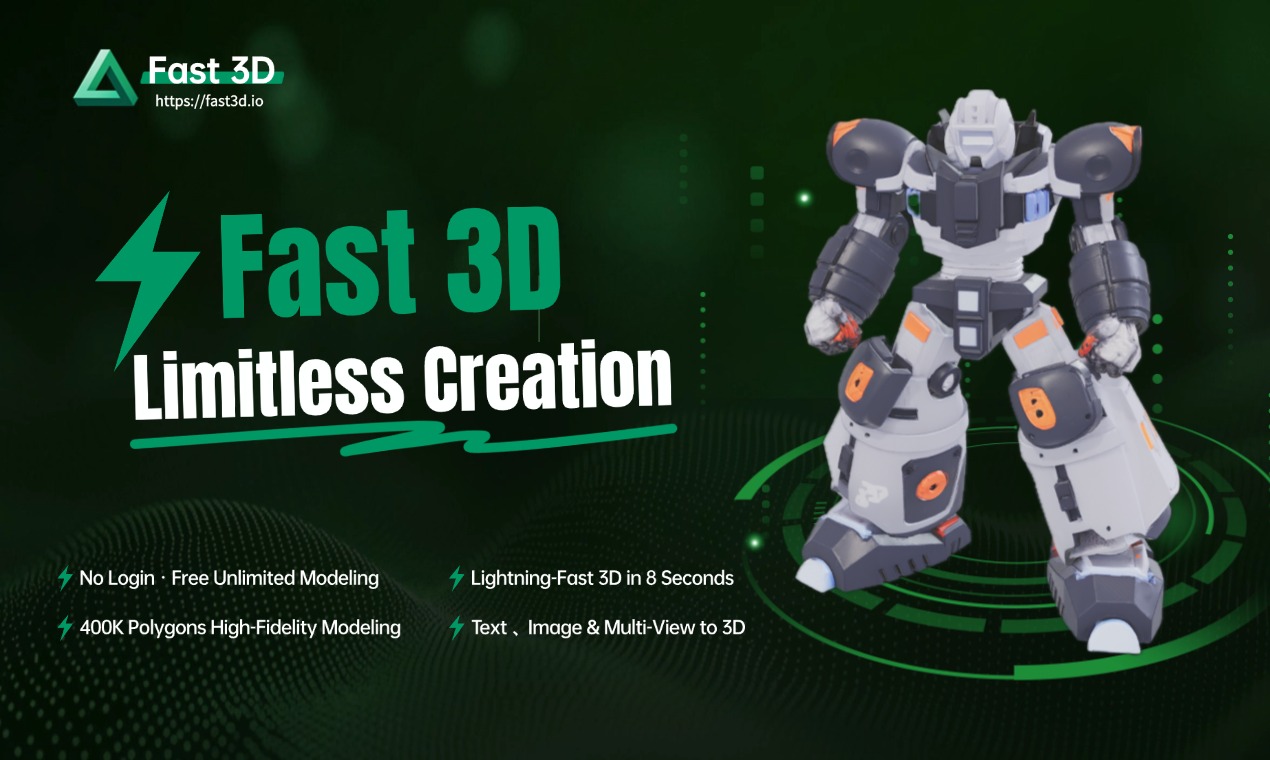
Fast3D is the leading AI-powered 3D model generator. Create high-quality 3D models from text or images in seconds.
Run a free AEO + signal audit for your domain.
AI Answer Engine Optimization (AEO)
List once. Convert intent from live AI conversations without heavy integration.
AI-powered 3D model creation is a process that utilizes artificial intelligence, primarily generative adversarial networks (GANs) and neural radiance fields (NeRFs), to generate or reconstruct three-dimensional digital assets. The technology automates complex tasks like mesh generation, texturing, and rigging by learning from vast datasets of existing 3D models and imagery. This significantly accelerates prototyping, reduces manual labor costs, and enables rapid iteration for product design, virtual environments, and digital twins.
The process begins by feeding the AI system with reference materials, such as 2D images, sketches, or textual descriptions, alongside specific stylistic and technical constraints.
AI algorithms then analyze the inputs to predict and construct the underlying 3D mesh, determining geometry, topology, and initial structural details autonomously.
The generated base model undergoes automated or semi-automated refinement for textures, lighting, and fine details, resulting in a production-ready 3D asset.
Enables rapid creation of photorealistic 3D product models from manufacturer CAD files or simple photos for interactive online catalogs and AR experiences.
Accelerates asset pipeline by generating varied environmental props, character clothing, or modular architecture elements, speeding up world-building.
Transforms architectural plans or sparse photo sets into detailed, fully-textured 3D building models and interiors for client presentations and virtual tours.
Facilitates rapid digital prototyping by converting concept art or basic sketches into viable 3D models suitable for initial design validation and simulation.
Quickly generates low-fidelity 3D models of scenes, characters, or props during pre-production to visualize concepts and plan shots efficiently.
Bilarna evaluates every AI-powered 3D model creation provider through a proprietary 57-point AI Trust Score. This score rigorously assesses technical expertise in AI tools like Point-E or Get3D, portfolio quality, client delivery track record, and data security protocols. We continuously monitor performance and client feedback to ensure listed partners maintain the highest standards of reliability and output quality.
Costs vary widely based on model complexity, required resolution, and turnaround time, typically ranging from $50 for simple assets to several thousand for high-detail, animated models. Pricing models include per-asset fees, subscription access to AI platforms, or custom project quotes from specialist agencies.
The primary advantages are immense speed and scalability. AI can reduce modeling time from days to hours, democratize access for non-experts through text prompts, and ensure consistency when generating large batches of similar assets. It excels at ideation and rapid prototyping stages.
Timelines range from minutes for basic, AI-generated concepts to a few business days for refined, production-ready assets. Simple models from 2D images can be generated in under an hour, while complex projects requiring multiple revision rounds may take a week.
Most providers deliver industry-standard formats like OBJ, FBX, GLTF, or STL, compatible with major game engines, CAD software, and 3D rendering suites. The specific format is usually agreed upon during project scoping to match your downstream application needs.
Optimal inputs include multiple high-resolution, orthogonal photographs of the subject or detailed textual descriptions with style references. Providing technical drawings, dimension specifications, or existing low-poly models as a base can significantly enhance the accuracy and quality of the final output.