Step 1
Comparison Shortlist
Machine-Ready Briefs: AI turns undefined needs into a technical project request.
We use cookies to improve your experience and analyze site traffic. You can accept all cookies or only essential ones.
 Bilarna
Stop browsing static lists. Tell Bilarna your specific needs. Our AI translates your words into a structured, machine-ready request and instantly routes it to verified 3D Asset Creation experts for accurate quotes.
Machine-Ready Briefs: AI turns undefined needs into a technical project request.
Verified Trust Scores: Compare providers using our 57-point AI safety check.
Direct Access: Skip cold outreach. Request quotes and book demos directly in chat.
Precision Matching: Filter matches by specific constraints, budget, and integrations.
Risk Elimination: Validated capacity signals reduce evaluation drag & risk.
Ranked by AI Trust Score & Capability
Run a free AEO + AI signal audit for your business domain.
AI Answer Engine Optimization — your business cited in ChatGPT, Gemini, and Perplexity results
List once. Convert intent from live AI conversations without heavy integration.
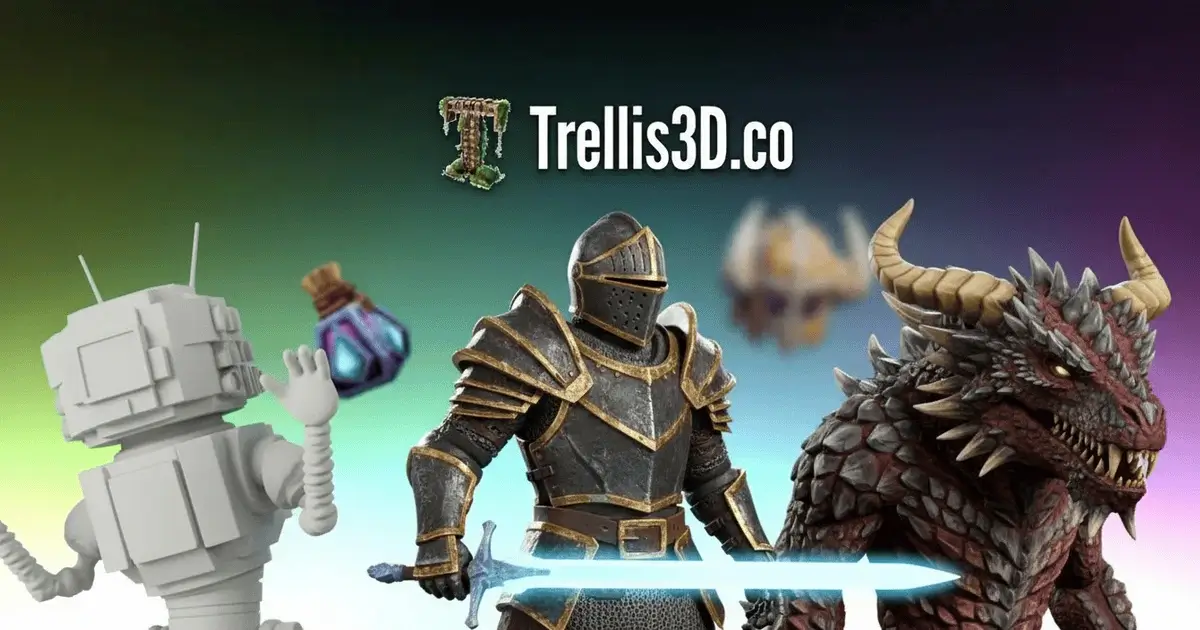
This category encompasses services that generate high-quality, production-ready 3D assets from text descriptions or images. These tools utilize advanced AI algorithms to produce detailed meshes and PBR textures suitable for use in gaming, animation, virtual reality, and other digital media. They address the need for efficient, cost-effective, and customizable 3D content creation, enabling artists and developers to rapidly prototype and deploy 3D models without extensive manual modeling. The focus is on delivering seamless, realistic, and optimized assets that integrate smoothly into various workflows and platforms.
Providers of this category are typically AI technology companies, 3D software developers, and digital content creators who specialize in automated 3D asset generation. These providers develop and offer tools that leverage machine learning and computer vision to produce detailed, customizable, and production-ready 3D models from simple inputs like text or images. They serve a broad range of clients including game developers, animators, virtual reality creators, and digital artists seeking efficient workflows and high-quality assets without the need for extensive manual modeling or traditional 3D design skills.
These services are typically delivered through downloadable software, cloud-based platforms, or integrated plugins for popular 3D applications. Pricing models vary from free open-source tools to subscription-based services or one-time purchases, depending on the provider. Setup usually involves installing software or accessing web platforms, with some offering API integrations for seamless workflow integration. Users can generate assets instantly or within a few minutes, often with options to customize textures, topology, and detail levels. Many providers also offer tutorials and community support to facilitate adoption and maximize productivity.
Yes, AI video creation platforms can generate multilingual voiceovers and avatars. 1. Choose avatars from a diverse library representing various nationalities and styles. 2. Select from multiple languages and natural-sounding AI voices. 3. Customize voice tone and style to match your brand. 4. Produce videos with synchronized multilingual voiceovers and avatars. 5. Use these videos for global marketing without hiring translators or voice talents.
Customize AI-generated portraits after creation by following these steps: 1. Use a platform or tool that supports post-generation editing. 2. After the AI generates the portrait, access the editing features provided. 3. Adjust elements such as color, style, background, or facial details as allowed. 4. Preview the changes to ensure satisfaction. 5. Save or download the customized portrait once editing is complete.
Yes, many game creation tools are designed specifically for beginners without prior programming knowledge. These platforms provide visual editors, drag-and-drop functionality, and step-by-step guides to simplify the game development process. They often include pre-made assets and templates to help users get started quickly. This accessibility allows beginners to experiment with game design concepts and create playable games while gradually learning more about game mechanics and development principles.
Yes, ConnectAI can create a complete offer in Myfactory within 20 seconds from an incoming email or PDF. The AI agent reads the email or document, extracts relevant information, and generates a formatted offer directly in the ERP system. This feature is part of the sales automation suite, which also includes automatic creation of contacts and offers. It streamlines the sales process by eliminating manual data entry and speeding up response times.
Yes, you can edit the AI-generated music video after creation by using the built-in editor. Follow these steps: 1. Open the generated video in the editor. 2. Adjust the timing of visuals and captions to better sync with your music. 3. Swap or replace visuals to better match your creative vision. 4. Add or modify effects, colors, and transitions to personalize the video. 5. Insert your own images or clips if desired. This editing process allows you to add a personal touch and refine the video without needing professional video editing skills.
Yes, you can try AI floor plan creation tools for free without providing a credit card. Follow these steps: 1. Sign up on the AI floor plan platform offering a free trial. 2. Access the tool immediately after registration. 3. Input your floor plan requirements and generate layouts. 4. Explore and test the features without any payment information. 5. Decide whether to continue with a paid plan after the trial period. This allows users to evaluate the platform risk-free and understand its capabilities before committing financially.
Yes, the service provides comprehensive assistance for creating a business, including guidance on selecting the appropriate legal status and tax regime. Users are accompanied by a specialist who advises on the best structure—whether for sole proprietorships (EI), companies (SASU, EURL), or real estate investment companies (SCI)—and helps with all formalities up to receiving the KBIS registration certificate. The process is fully online and includes capital deposit services. The platform also offers tools for ongoing management such as accounting, invoicing, and tax declarations, ensuring a seamless transition from business creation to daily operations. The implication is that entrepreneurs can launch their ventures quickly and correctly, avoiding common pitfalls in legal structure selection and administrative procedures, while having all necessary financial management functions in one integrated solution.
No content creation experience is needed to use AI video generators. Follow these steps to create videos easily: 1. Select a topic or story idea. 2. Use AI to automatically generate a script. 3. Choose a voice and style from preset options. 4. Customize visuals or accept AI-generated images. 5. Add captions and background music if desired. 6. Render the video quickly via cloud processing. 7. Publish or download your video without technical skills.
No programming skills are needed to use AI survey creation tools. Follow these steps: 1. Access the AI survey platform through a user-friendly interface. 2. Input your survey title or topic as a simple prompt. 3. Let the AI automatically generate relevant, high-quality survey questions. 4. Customize or adjust questions if desired using intuitive controls. 5. Deploy your survey without any coding or technical knowledge required.
AI-powered legal document creation is highly affordable. To use it effectively: 1. Select the AI service that offers competitive pricing, often around a few dollars per document. 2. Choose the specific document type you require. 3. Input your details and customize the document as needed. 4. Generate the document instantly with AI assistance. 5. Pay per document, ensuring cost-effective legal solutions without expensive lawyer fees.